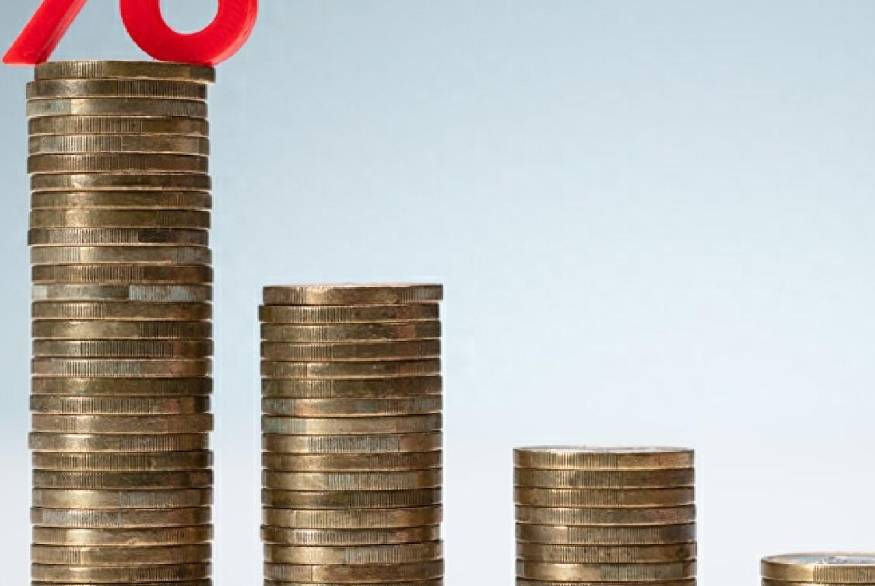
Let's cut right to the chase. You've probably heard the startling statistic: the wealthiest 10% of Americans own about 88% of all stocks. That number feels almost dystopian, doesn't it? It's thrown around in political debates and economic reports, often leaving the average person with a sinking feeling about their own financial future. But here's the thing most articles won't tell you: that 88% figure is both profoundly true and subtly misleading. It's not a simple case of 10% of individuals directly holding stock certificates. The real story involves a complex web of indirect ownership through retirement accounts, mutual funds, and institutional investors that blurs the lines of who truly "owns" the market's wealth. Understanding this distinction is the key to knowing what this concentration means for your 401(k), the economy's stability, and why it feels so hard to get ahead.
What's Inside This Deep Dive
The 88% Figure: What Does It Really Mean?
The core data comes from the Federal Reserve's Survey of Consumer Finances (SCF) and its Financial Accounts of the United States (the "Z.1" report). These are the gold standard for tracking wealth distribution. The latest figures consistently show that the top 10% of households by wealth hold an enormous share of corporate equities and mutual fund shares. When people say "88%," they're usually referring to this aggregate value.
But let's break down that "top 10%." It's not a monolith. The wealth distribution within that group is even more skewed. The top 1% alone owns over half of all stocks. The next 9% (those in the 90th to 99th percentile) own a significant chunk, bringing the total to that infamous 88%. The bottom 90% of households are left with the remaining 12% of stock market wealth.
How Stock Ownership is Measured (The Data Sources)
To avoid AI hallucination, we rely on concrete, publicly available sources. The primary source is the Federal Reserve's triennial Survey of Consumer Finances (SCF). It's a detailed survey of thousands of families. Another critical piece is the Fed's Financial Accounts of the United States, which provides a macro view of assets and liabilities.
Researchers from institutions like the National Bureau of Economic Research (NBER) and think tanks like the Urban Institute analyze this data. A common mistake is to conflate *income* with *wealth*. A high-income surgeon might be in the top 5% by earnings but could have substantial student debt and a modest investment portfolio, placing them outside the top 10% by *net worth*, which is what the 88% figure is based on. Wealth includes the value of all assets (homes, businesses, stocks) minus debts.
What's Behind the Number: Direct vs. Beneficial Ownership
This is where the nuance lives. When you buy an S&P 500 index fund through your Fidelity 401(k), who owns the stocks? Legally, a massive institution like BlackRock or Vanguard (as the fund manager) is the shareholder of record. But you are the beneficial owner—you get the economic gains and losses.
The 88% statistic captures beneficial ownership. It assigns the value of those mutual fund shares in your 401(k) to your household wealth. So, the concentration reflects the fact that higher-wealth households have much larger retirement and taxable investment accounts. The rise of index investing has ironically centralized legal ownership (Vanguard and BlackRock are the largest shareholders of most big companies) while spreading beneficial ownership to millions of individuals—though still in a highly unequal way.
| Wealth Group (Percentile) | Approximate Share of Total Stock Market Wealth | Primary Holding Methods |
|---|---|---|
| Top 1% | Over 50% | Direct stock, trusts, hedge funds, large private accounts. |
| 90th - 99th Percentile | About 38% | Substantial 401(k)/IRA balances, taxable brokerage accounts, some direct holdings. |
| Bottom 90% | About 12% | Modest 401(k)/IRA balances, pension fund interests (indirectly), little to no direct stock. |
Look at that table. The bottom 90%—that's the vast majority of us—collectively own just one-ninth of the pie. This has concrete implications.
What This Concentration Means for the Average Investor
You might be thinking, "Okay, it's unequal, but does it affect my personal strategy?" It absolutely does, in ways that aren't always obvious.
Market Volatility and Your Retirement: When the wealthiest 10% control nearly nine-tenths of the market, their investment decisions and sentiment have an outsized impact on prices. A wave of selling from large institutions or wealthy families can trigger bigger downturns. For someone in the bottom 90% with a small 401(k), this means your retirement savings are more vulnerable to swings driven by the actions of a group you're not part of. It can feel like being a passenger in a car driven by someone else, with no control over the brakes.
The Home Bias Problem: For many in the bottom 90%, their primary asset is their home, not stocks. When the stock market zooms ahead, as it often does, the wealth gap widens because they don't participate proportionally. This isn't just about saving more; it's about the type of assets you can afford to hold. Real estate appreciates, but historically, equities have outperformed. Missing that growth engine is a structural disadvantage.
A Personal Note: I remember advising a client years ago, a diligent saver who was terrified of the stock market after 2008. She kept everything in cash. Her neighbor, a corporate lawyer, kept buying index funds through the dip. A decade later, their financial trajectories were worlds apart. The lawyer's wealth wasn't just from a higher salary; it was from owning a productive asset that grew exponentially. My client's fear, while understandable, locked her out of that engine. The system, frankly, rewards those who already have enough capital to absorb risk.
The takeaway isn't to despair. It's to understand the playing field. Your most powerful tool is knowledge. Recognizing that stock ownership is the primary driver of wealth accumulation in modern America is step one. Step two is developing a strategy to build your stake, however small it starts, in a way that works for you—consistently and over the long term.
Your Top Questions on Stock Market Ownership, Answered
The story of who owns 88% of the stock market is more than a shocking statistic. It's a lens through which to view economic mobility, risk, and opportunity. The number reflects deep structural factors—the power of compound returns over generations, differences in access to financial education, and the simple math that it takes money to make money in the market. For the individual investor, the goal isn't to lament the figure but to understand the rules of the game it reveals. Your path isn't about catching up to the top 10%; it's about steadily building your own share of that productive capital, one invested dollar at a time.